MetriCup Guide
Same-Store Sales: The Metric Every Multi-Location Coffee Shop Owner Should Track
 Rich Manalang
Opening a second location increases top-line sales. But is your original store still growing? Same-store comps provide the definitive answer.
The problem with total revenue as a growth metric
When you open a second location, total company revenue goes up. But aggregate numbers mask individual store performance. If location one is quietly declining while location two ramps up, total revenue looks healthy until your flagship store faces a cash crisis.
Same-store sales (also called comps or comparable store sales) strip out new store openings to isolate organic growth or decline at each location.
How same-store comps work
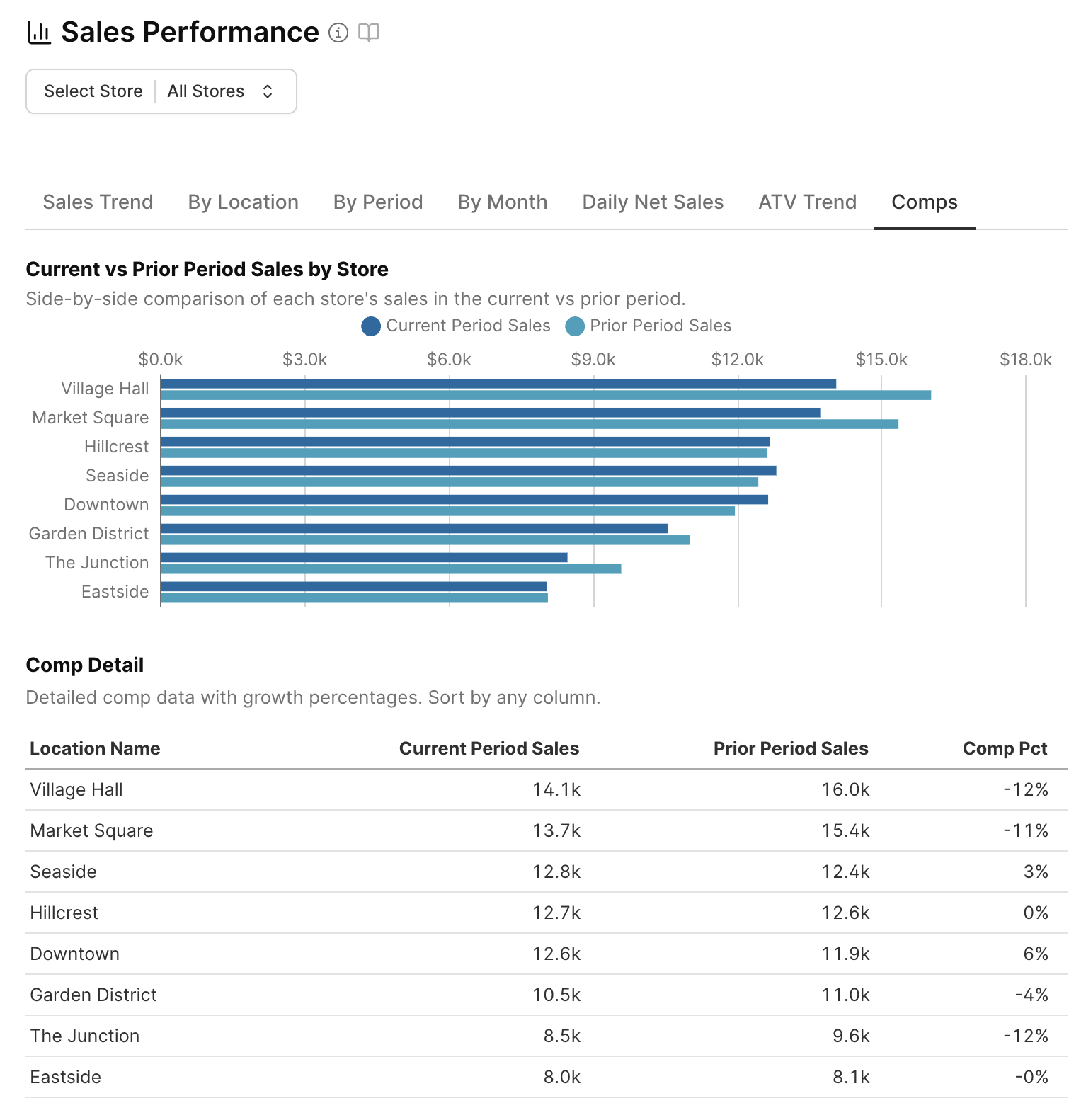
Take each store's revenue for the current period and compare it to the matching period last year (or prior equivalent period). Express the variance as a percentage.
Formula
Comp % = (Current Period Sales − Prior Period Sales) ÷ Prior Period Sales × 100
Example: $14,100 this month vs $16,000 last year = −11.9% comp
A positive comp means the location grows under its own steam. A negative comp flags declining customer volume regardless of total company expansion.
What comps reveal
One location declines while others grow
This indicates a local operational issue. Investigate store management, shift turnover, speed of service, local road construction, or new nearby competitors.
All stores decline simultaneously
This signals broader market factors: sustained adverse weather, regional economic slowdowns, or a recent system-wide price increase.
One location significantly outperforms
Study what makes that store successful. Whether it stems from proactive barista hospitality, pastry pairing, or local community events, successful tactics can transfer to other stores.
Period-over-period vs year-over-year
Use both timeframes for different operational questions:
Period-over-period (e.g., this month vs last month) reveals short-term momentum. It catches emerging issues early, though seasonal weather swings can introduce noise.
Year-over-year (e.g., this April vs last April) eliminates seasonal noise. When a cafe falls 10% year-over-year for three consecutive months, you have a clear operational trend.
When to take action
A single negative comp month can be weather or calendar noise. Two consecutive negative comps warrant investigation. Three consecutive negative comps require direct operational intervention: staffing adjustments, barista retargeting, or local promotions.
Catching declining comps early preserves your operational options before cash flow tightens.
MetriCup
Comps calculated automatically across all your locations
MetriCup pulls your Square POS data and calculates same-store comps for every store across period-over-period and year-over-year timelines.
Get early accessRelated Operator Guides
View All Guides →The Multi-Channel Margin Trap: When Delivery Apps Cannibalize Barista Tips
Delivery apps take a 25% commission rake and average 0.4% tips compared to 12.4% in-store.
Why Your Store Managers Never Look at BI Dashboards (and Why 6:00 AM Email Briefs Work)
Automated 6:00 AM email digests give opening shift leads actionable numbers before doors unlock.